Whitepages is a people search platform that provides access to phone numbers, addresses, and public record details from multiple data sources. It is widely used for basic identity checks and contact lookups across the United States. Many users search for Whitepages people finder alternatives because the platform limits full results behind paid reports. They compare other people search websites that offer broader free previews, better data reach, and more flexible search options for everyday use.
Whitepages works as a public data aggregation system that collects records like phone listings, address history, and background details into one place. However, full reports often require payment, which pushes users toward other best people finder sites with lower-cost or partially free access models. Because of this gap, alternative platforms are often evaluated based on data freshness, search speed, and report depth. Users also look for tools that provide reverse lookup, name search, and address verification without heavy restrictions or paywalls.
What is Whitepages People Finder?
Whitepages People Finder is a digital search system that pulls public records https://www.whitepages.com/ to show basic contact and identity details about a person. It works as a people lookup database that helps users find names, phone numbers, and addresses from available records. This system supports whitepages lookup, whitepages name search, and whitepages reverse phone lookup in one place.
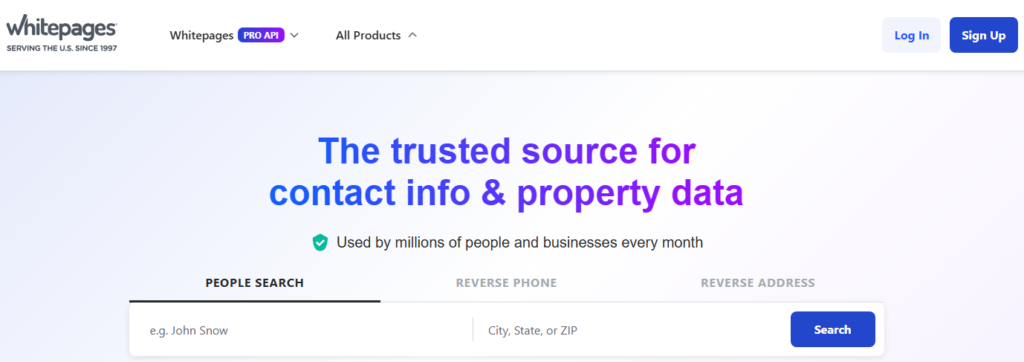
Whitepages lookup and core database system
Whitepages runs as a large public record search engine that collects data from public listings, phone directories, and address files. It connects these records into one identity search tool that matches names, numbers, and locations.
In practice, a whitepages lookup can show:
- Full name tied to a phone number
- Past and current address listings
- Possible relatives linked to the record
- Basic location history from public data
The system works through structured matching. When a user enters a detail, it scans its database and returns connected records. This process supports both whitepages name search and general identity checks.
Reverse phone search, name search, and address matching
Whitepages includes multiple search options that serve different needs. Each method pulls from the same people lookup database, but results vary based on input type.
Search functions include:
- Whitepages reverse phone lookup: Enter a phone number to see the registered name and possible location
- Whitepages name search: Enter a person’s name to view matching public records
- Address lookup system: Enter an address to see associated names or residents linked to that location
These tools combine into a structured identity view inside the platform. For example, a single phone number search may return multiple connected data points, such as name variations or past addresses.
Why People Search for Whitepages Alternatives
People look for Whitepages alternatives when they want more accurate details, fewer paywalls, and better privacy control. Many users shift to sites like whitepages alternatives, free tools that provide faster public record checks without payment blocks. Search demand continues to grow for free people search sites and online identity lookup tools that feel more open and easier to use.
Paid Results Limits and Data Accuracy Concerns
Many users move away from Whitepages due to restricted previews and paid-only results. Basic contact details often sit behind paywalls, which slows down quick verification. Accuracy issues also play a major role. Public records change often, yet some online identity lookup tools may show outdated addresses or phone numbers.
Common concerns linked with sites like whitepages include:
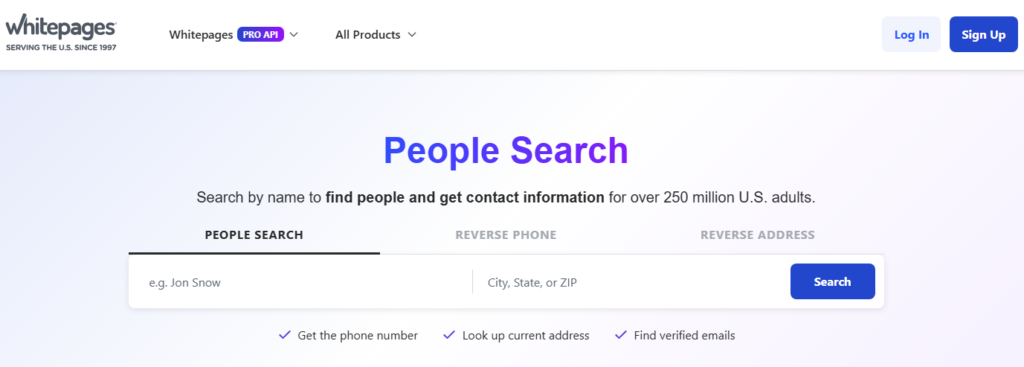
- https://www.whitepages.com/people-search
- Locked results requiring subscription payments
- Outdated or incomplete contact records
- Mixed data from different public sources
- Repeated listings for the same person
Public information search engines rely on large datasets, but delays in updates can reduce trust. As a result, users often look for faster, clearer alternatives.
Demand for Free Tools and Privacy Restrictions
Interest in whitepages alternative free platforms has increased due to cost barriers and privacy concerns. Many users want quick checks without account creation or payment prompts. Free people search sites often attract users who need simple background checks, reverse phone lookups, or address confirmations. These tools focus on basic public records instead of full reports.
Reasons behind this demand include:
- No payment required for basic search results
- Faster lookups for unknown callers or contacts
- Less data sharing during searches
- Simple interfaces for quick checks
Online identity lookup tools also appeal to users who want limited exposure of their search activity. Privacy restrictions on major platforms push users toward lighter, more open public information search engines that do not require deep personal data input.
Best Whitepages People Finder Alternatives
Many users search for the best people finder websites when Whitepages does not meet their needs or shows limited data. Several people search websites now provide broader public records, phone lookup, and address history. The strongest Whitepages alternative free and paid tools offer reverse lookup, background details, and social traces in one place. These platforms help locate phone numbers, emails, and address records using public data sources.
True People Search
- What it does
- Pulls public records linked to names, phone numbers, and addresses
- Works as a reverse lookup tool and name search system
- Shows basic identity data from public databases
- Pros
- Free people search service
- Simple and fast results
- No account needed
- Good for quick checks
- Cons
- Limited background depth
- Ads may appear
- Data accuracy may vary
- Free vs Paid note
- Fully free people search website
- No paid subscription required
- Data type
- Phone numbers
- Home addresses
- Possible relatives
- Basic identity records
Intelius People Finder
- What it does
- Builds detailed reports from public records and databases
- Works as a full background check tool
- Links phone numbers and addresses to identity profiles
- Pros
- Deep background reports
- Strong identity matching
- Reverse phone lookup included
- Professional-level data
- Cons
- Limited free results
- Paid subscription required
- Some data behind a paywall
- Free vs Paid note
- Free preview available only
- Full reports are paid
- Data type
- Phone numbers
- Email addresses
- Address history
- Court and criminal records
Spokeo People Finder
- What it does
- Aggregates social media and public records
- Builds combined digital identity profiles
- Connects online traces with contact details
- Pros
- Strong social media linking
- Easy name and email search
- Large data network
- Clean report layout
- Cons
- Some outdated data
- Full reports require payment
- Not all data verified
- Free vs Paid note
- Free basic search only
- Paid reports for full details
- Data type
- Email addresses
- Phone numbers
- Social media profiles
- Residential addresses
Radaris People Finder
- What it does
- Uses public records and government data sources
- Creates identity and property-based profiles
- Tracks employment and address history
- Pros
- Strong public records coverage
- Includes property data
- Reverse lookup support
- Structured reports
- Cons
- Some outdated listings
- Paid upgrade needed for full access
- The free version has limits
- Free vs Paid note
- Basic search is free
- Full reports require payment
- Data type
- Phone numbers
- Property records
- Address history
- Employment-related data
ZabaSearch People Finder
- What it does
- Provides simple name and phone lookup
- Pulls data from public records
- Focuses on quick identity search
- Pros
- Free lookup engine
- No account required
- Fast search results
- Simple interface
- Cons
- Limited detail depth
- No advanced reports
- Data may be outdated
- Free vs Paid note
- Mostly free service
- Some data redirects to paid partners
- Data type
- Phone numbers
- City/state addresses
- Name listings
- Basic public records
Whitepages vs Other People Finder Sites
Whitepages is a well-known people search engine that provides phone lookup, address details, and background-related data. Other people finder sites often compete by offering broader databases, different pricing models, or faster lookup results. A clear people finder comparison helps users see differences in reverse lookup accuracy and available data enrichment tools. Whitepages focuses on structured identity data, while competing platforms often prioritize wider data aggregation from multiple public sources.
Whitepages vs Other People Finder Platforms
Whitepages operates as a structured directory with phone, address, and identity records. Competing sites often expand coverage using social profiles, public records, and commercial databases. This creates noticeable differences in data depth and search results.
Comparison factors in a people search engine comparison:
- Reverse phone lookup results
- Address history accuracy
- Background data depth
- Data enrichment tools availability
- Search speed and the freshness of records
Whitepages tends to focus on verified identity mapping. Other platforms often prioritize broader but less structured datasets.
Whitepages vs TruePeopleSearch
TruePeopleSearch provides free people search results with wide public record coverage. Whitepages focuses more on structured identity data and layered detail options.
| Feature | Whitepages | TruePeopleSearch |
|---|---|---|
| Reverse lookup accuracy | Strong structured matches | Wide coverage, less filtering |
| Data depth | Moderate to high | High volume, mixed quality |
| Data enrichment tools | Paid advanced reports | Limited enrichment options |
| Search type | Phone, name, address | Name, phone, address |
TruePeopleSearch often returns more raw results. Whitepages filters and organizes identity data more cleanly. In reverse lookup accuracy, Whitepages tends to provide more consistent match confidence, while TruePeopleSearch offers broader but less refined outputs.
Whitepages vs Spokeo
Spokeo combines social data, public records, and marketing datasets. It often presents more lifestyle-related information compared to Whitepages.
Differences in the People Finder comparison:
- Spokeo pulls from social networks and public listings
- Whitepages focuses on verified contact and identity records
- Spokeo provides stronger profile-style summaries
- Whitepages offers more structured phone and address validation
Spokeo uses advanced aggregation methods similar to data enrichment tools, combining scattered data points into unified profiles. Whitepages prioritizes accuracy in identity confirmation over wide social aggregation.
Whitepages vs Intelius
Intelius focuses heavily on background reports, including criminal history summaries and detailed identity reports. Whitepages centers more on contact data and identity verification.
Comparison highlights:
- Intelius provides deeper background reports
- Whitepages offers faster basic identity lookup
- Intelius includes broader public record aggregation
- Whitepages emphasizes structured identity matching
In terms of reverse lookup accuracy, Whitepages performs strongly for phone and address matching. Intelius performs better in extended report depth but may include broader, less filtered datasets.
Accuracy, Data Depth, and Search Quality
Different platforms perform differently based on data processing methods. Whitepages relies on structured identity matching, which improves consistency in results.
Factors users compare:
- Match precision in phone lookup results
- Depth of address history records
- Freshness of public record updates
- Filtering of duplicate or outdated entries
In most people search engine comparison scenarios, Whitepages ranks higher in structured accuracy. Other platforms often compensate with broader datasets or social-based enrichment layers.
Types of People Searches Explained
People search tools work through four main methods: phone number, full name, physical address, and email. Each method pulls different public records and digital signals to identify a person or contact details. These search types power tools like Whitepages alternatives, helping match identity data across phone directories, public records, and online listings.
Reverse Phone Lookup
Reverse phone lookup focuses on finding a person behind a phone number. It is often used for unknown callers, spam calls, or missed call checks. A common example is whitepages reverse phone lookup, which scans phone directories and public listings to match a number with a name or location. This type of search is known as phone-based identity search or caller ID tracing.
Uses of reverse phone lookup include:
- Identifying unknown callers
- Checking spam or scam numbers
- Matching business or personal contacts
- Finding location details tied to a number
In many cases, results show the name, carrier type, and general location. Some databases may also link social profiles or associated records when available.
Name Search
Name search works by entering a full name to find related public records. It acts as an identity lookup by full name, pulling data from public directories, social listings, and address records. This method helps when a phone number is not available, but a name is known.
Typical results from a name search may include:
- Possible current and past addresses
- Known phone numbers linked to the name
- Age range or location history
- Relatives or associated contacts
Name-based searches often support background checks, reconnecting with old contacts, and verifying identity details. Accuracy improves when the name is combined with a city or state filter.
Address Lookup
Address lookup focuses on a physical location and connects it to associated residents. It is also called location-based people search or residential lookup. Tools like whitepages address lookup allow users to enter a street address and view associated names or past occupants linked to that property.
Common uses include:
- Checking current or previous residents
- Verifying property occupancy
- Finding associated contact records
- Reviewing the location history of a person
This method works well when only an address is known. It helps connect housing records with identity data from public databases.
Email Search
Email search traces identity through email addresses. It is also called digital identity tracing because it connects online activity with contact records. This search type checks whether an email appears in data leaks, public profiles, or registration records. It may also link to usernames used across different platforms.
Typical insights from email search include:
- Possible owner name
- Associated social accounts
- Breach or leak exposure history
- Connected usernames or profiles
Email-based search is often used in fraud checks, account verification, and contact validation. It helps connect online identity patterns across multiple platforms.
Are Free People Search Sites Safe?
Free people search sites can offer quick background details, but safety depends on how the data is collected and used. Some whitepages alternative free tools rely on public records, while others pull from less transparent sources. Many platforms look simple on the surface, yet they may store or reuse search activity data. That creates privacy concerns for people who run frequent searches.
Data Privacy Concerns
Free people search sites often collect and store search behavior patterns. This can include names searched, IP logs, and repeated queries.
Privacy risks include:
- Search history tracking across sessions
- Data resale to marketing networks
- Limited transparency on data sources
- Old or outdated record storage
Some free people search websites combine data from social platforms, court records, and directories. That aggregation can create profiles that feel detailed, even when some parts are outdated or incorrect.
Accuracy Issues
Information shown on free people search sites may not always match real-world records. Data often comes from mixed public databases, leading to gaps or duplication.
Common accuracy problems include:
- Wrong phone numbers linked to names
- Old addresses still listed as current
- Duplicate profiles for one person
- Missing recent updates from official records
These gaps happen due to delayed updates in public record systems. That means results should be treated as reference data, not verified identity proof.
How People Finder Websites Work
People search websites collect and organize public data into searchable profiles. They use large-scale data systems that combine records from multiple sources into one searchable index. These platforms rely on structured processes that connect names, phone numbers, addresses, and related identifiers. The result is a searchable database built from distributed public records.
Data Aggregation Systems
Most people who search websites depend on data aggregation systems. These systems pull information from multiple databases and combine it into unified profiles.
Common data sources include:
- Public voter registration lists
- Property ownership records
- Phone directories and telecom listings
- Court and legal filings
Once collected, the data is grouped and stored for quick search results. This process allows fast retrieval across millions of records.
Public Records Indexing
A core function behind these platforms is public records indexing. This process organizes raw records into structured formats that can be searched easily.
Indexing steps usually include:
- Collecting raw records from public databases
- Standardizing formats like names and addresses
- Sorting records into searchable categories
- Updating entries when new data appears
This system helps create fast lookup results for names, phone numbers, or addresses. However, delays in updates can lead to outdated listings.
Identity Matching Algorithms
To connect records, people search websites use identity matching algorithms. These systems compare data points to determine if records belong to the same person.
Matching is often used:
- Name similarity checks
- Address overlap patterns
- Phone number history links
- Email or alias connections
These algorithms assign confidence scores to matches. When confidence is low, multiple profiles may appear for one identity.
FAQs About Whitepages Alternatives
Whitepages alternatives help users compare people search tools that provide phone lookup, address search, and public record data. Many users switch to these platforms to get better detail, different pricing, or wider record coverage. These FAQs explain common questions in a clear way.
Is Whitepages free?
Whitepages offers limited free information, but most detailed reports require payment. Free results usually show basic name matches or general location details linked to a phone number. Full reports often sit behind paid plans. Paid features may include reverse phone lookup details, address history, and possible relatives. It can also show spam or scam risk for phone numbers. Many users try free alternatives first before upgrading.
What is the best alternative to Whitepages?
Several people search sites compete with Whitepages in data coverage and pricing. Each platform focuses on different record types like phone data, social profiles, or background records. Choice depends on what type of search is needed. Popular options include Spokeo, BeenVerified, TruePeopleSearch, and FastPeopleSearch. Some focus more on free basic searches, while others offer deeper paid reports. Users often compare results across multiple tools.
Which people search site is most accurate?
Accuracy depends on how often a database updates public records. Some sites pull from more recent sources, while others rely on older aggregated data. No single platform stays fully accurate all the time. BeenVerified and Spokeo often show stronger match results for identity and contact data. Free tools like TruePeopleSearch can be quick but sometimes less detailed. Cross-checking multiple sites usually improves the reliability.
Are people-finder websites legal?
People finder websites are legal when they use public records and publicly available data sources. These platforms collect information from government records, directories, and other open databases. They do not access private or restricted files. They are mainly used for personal purposes like reconnecting with people or verifying contact details. However, use for employment screening or credit decisions is restricted under the law. Each platform also has its own terms of service that users must follow.
Can Whitepages alternatives show criminal records?
Some Whitepages alternatives may include limited criminal record information, but it depends on the data source and subscription type. Most platforms pull this data from public court records and government databases where available. Services like BeenVerified or similar background tools may show arrest history, charges, or court case summaries. However, results are not always complete or fully up to date. Many free people search tools do not include criminal records at all, or they show only basic mentions without full details.